


The NBU updates its macroeconomic forecast every quarter and publishes it in the Inflation Report. The report has lots of useful information and is mainly meant for professionals to read. Here on this page, we use plain language to tell you what the NBU thinks the Ukrainian economy’s future will be like.
Below, we explain the forecast from our January 2026 Inflation Report.
How the economy is holding up
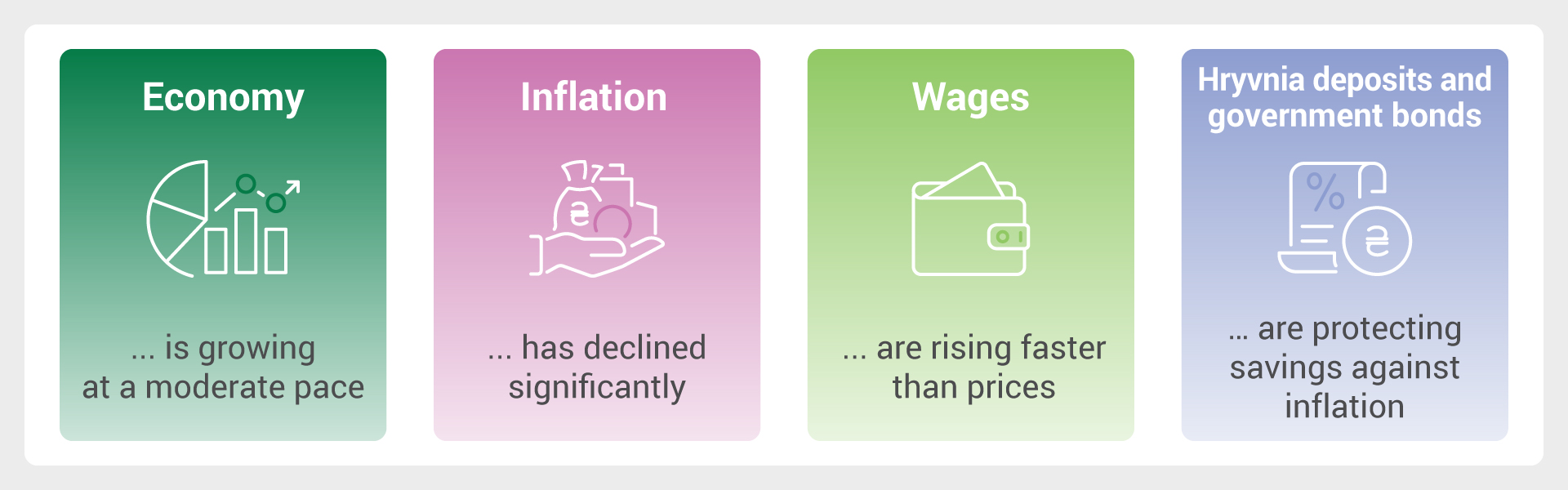
russia’s massive air strikes against Ukrainian energy facilities and ports have hit the economy hard. It’s harder to do businessand produce goods during power cuts. Power outages also discourage people from making new purchases. With light and heating being scarce, people spend less money on non-essential goods.
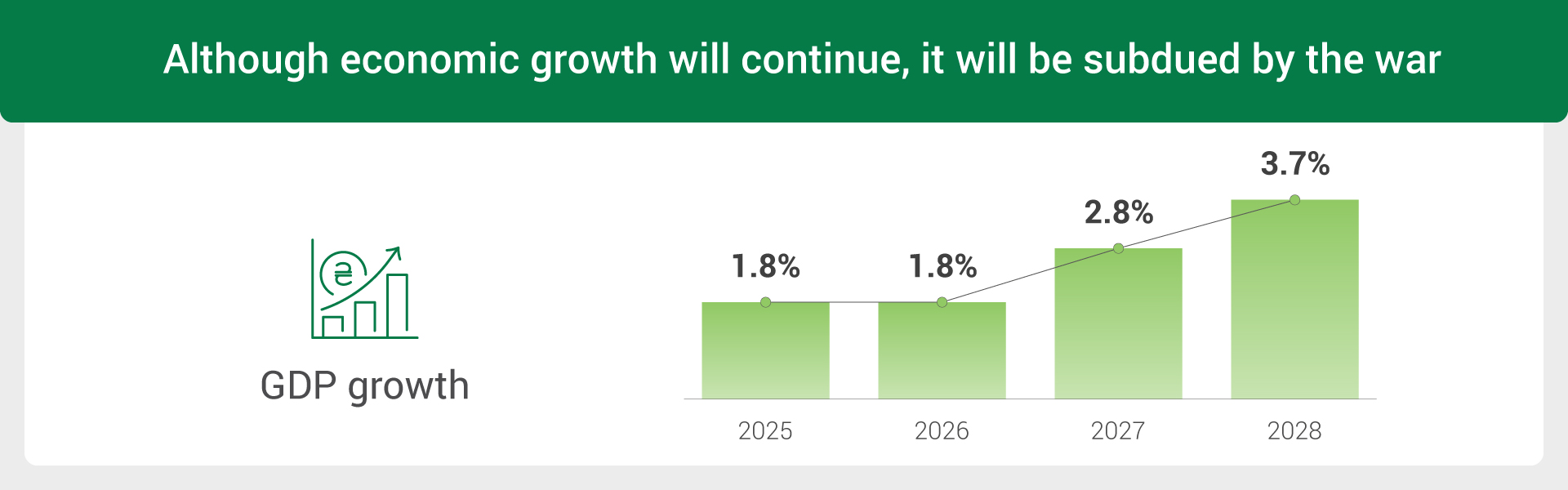
Despite russian attacks, the economy keeps growing. Farmers harvested lots of crops last year and exported some overseas. Military spending and infrastructure rebuilding are supporting industries such as metallurgy, machine-building, and construction. High government social spending is bolstering people’s ability to buy goods and services. Given this, the NBU has only slightly reduced its 2026 forecast for Ukraine’s real GDP, to 1.8%, down just a bit from the previously projected 2%.
Growth will accelerate in the coming years thanks to new investment projects, especially if security risks decrease. But it’s vital that Ukraine’s international partners keep supporting it financially.
The good news is that the EU has already approved billions of euros in aid to support Ukraine further. This greatly reduces risks to the economy.
How jobs and wages are doing
Because of migration and the military draft, there aren’t enough people to fill available jobs. Damage to infrastructure has worsened living conditions and forced additional migration abroad in recent months. Surveys show that businesses are struggling to find employees.
But the the labor shortage isn’t as bad as a year ago, because veterans, women, youth, and retirees are being hired more actively. The number of resumes posted online has been growing faster in recent months than the number of vacancies.
Wage growth continues. It’s been slower than before, but quicker than inflation. Real wages were up about 7% in 2025. In coming years, real wages are seen to rise 6–7%, as worker shortages will probably still be there both in wartime and during the postwar reconstruction.
What’s up with prices
Back in the spring of 2025, inflation was quite high at almost 16%, but has since fallen sharply. By the end of 2025, it had dropped to 8%, and in January 2026 prices were 7.4% higher than a year earlier.
Last year’s good harvests really helped reduce inflation. Food prices grew much more slowly, and some products even became cheaper. The National Bank of Ukraine also helped by keeping sustainable conditions in the foreign-exchange market. It limited price growth for imported goods. In addition, the NBU kept hryvnia savings attractive, reducing pressure from consumer demand.
But the war is preventing inflation from slowing more quickly. Energy problems and labour shortages are increasing business costs and forcing companies to review prices more often.
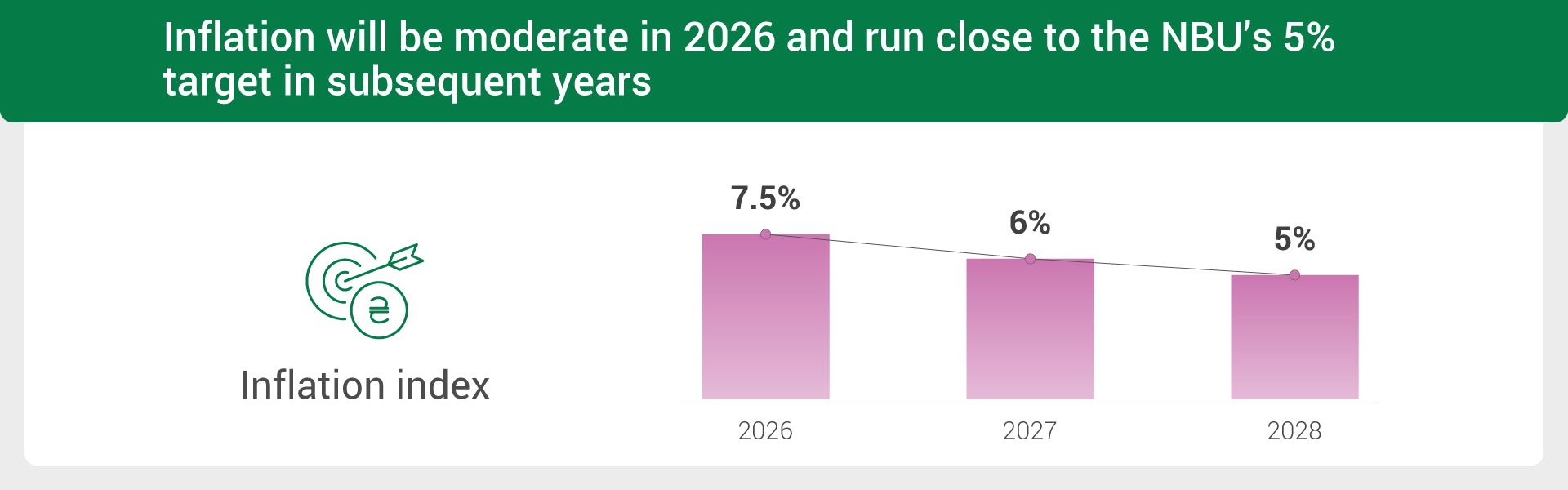
The National Bank of Ukraine expects inflation to remain moderate this year. In the following years, it is expected to gradually decrease and move closer to the 5% target. Why? Thanks to better harvests (assuming normal weather), moderate oil prices and further NBU actions.
But the war remains the main risk to this inflation forecast, of course.
How to protect savings from inflation
Hryvnia government bonds and bank deposits remain attractive ways to save money. Interest rates on hryvnia deposits are 10–15% per year, while government bonds offer 13–17%. This is higher than the National Bank of Ukraine’s 2026 inflation forecast of 7.5%.
Which means returns on hryvnia investments are high enough to protect savings from inflation. It comes as no surprise then that people are making hryvnia bank deposits and buying domestic government debt securities rather enthusiastically. Ukrainians have invested increasingly more money into these instruments in recent months.
It is important for the NBU to keep these options attractive. The more that people trust the hryvnia, the less foreign exchange they buy. This reduces pressure on the exchange rate, helps preserve international reserves, and supports lower inflation. This is why the NBU has been gradually lowering its key policy rate – to support demand for hryvnia instruments and keep inflationary processes under control.